
Blog
What’s Happening in French Politics Right Now

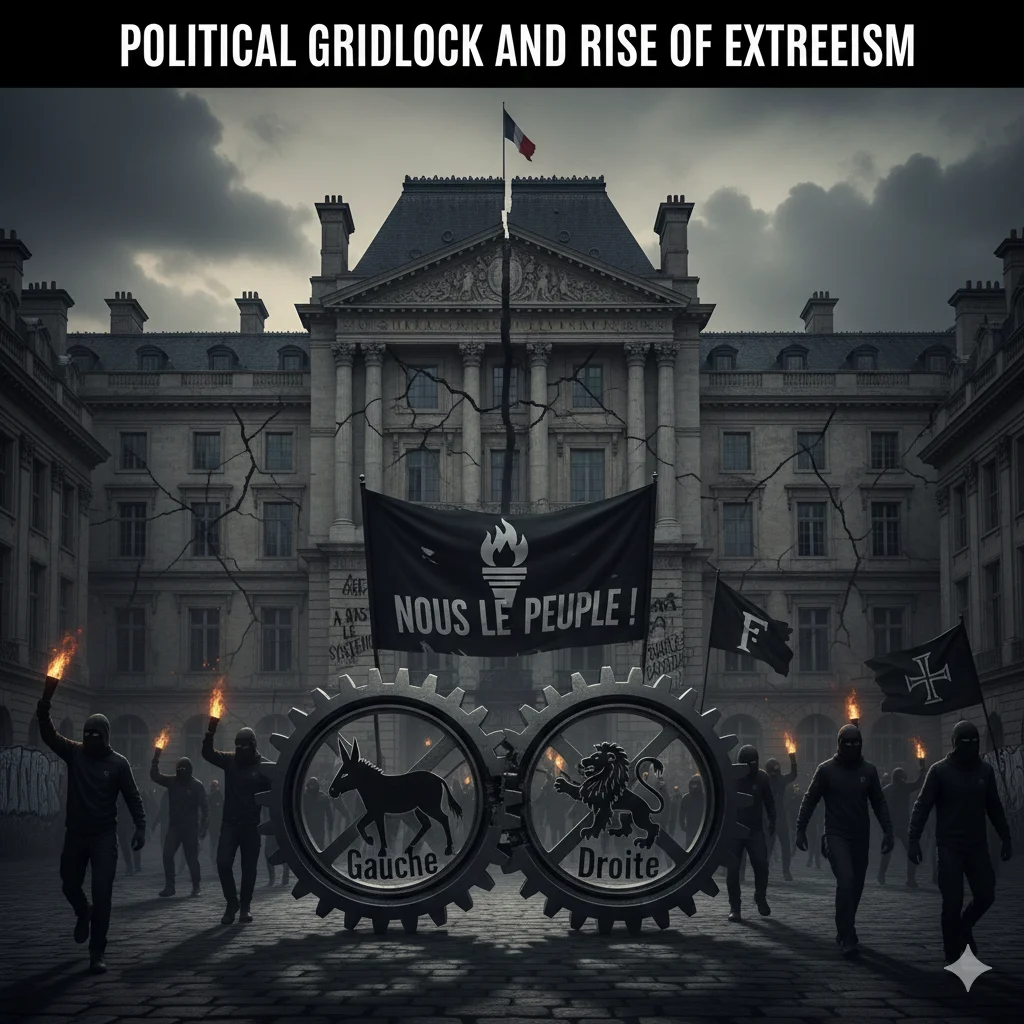
France is experiencing a serious period of political paralysis — one of the most turbulent since the establishment of the Fifth Republic.
📍 Why There’s Gridlock
A snap parliamentary election in 2024 produced a sharply divided National Assembly with no clear majority among the main political blocs:
- A left-wing alliance called the New Popular Front
- President Macron’s centrist coalition
- The far-right National Rally (RN)
No faction has enough seats to govern alone, and repeated attempts to form stable coalitions have failed. This has resulted in:
- Multiple short-lived prime ministers
- Difficulty passing the national budget
- Frequent government collapses and resignations
- Reliance on emergency “stopgap” laws to keep public services running into 2026 instead of a passed budget
Parliament recently approved a temporary budget rollover to avoid a shutdown, but a full 2026 budget has not been agreed — a sign of continuing deadlock.
📊 Gridlock Is Hurting Governance and Confidence
Because of this ongoing instability:
- The government struggles to pass fiscal and economic reforms.
- Investors and rating agencies are watching France’s growing budget deficit closely.
- Trust in political institutions — including government, elections, and judicary — has dropped sharply among the public.
Economists and leaders warn that continued paralysis could weigh on economic growth and public services.
🔥 Rise of the Far-Right and Political Extremism
The far-right National Rally (RN) — led by figures like Marine Le Pen’s protégé Jordan Bardella — has gained ground politically, even though it has not secured an absolute parliamentary majority.
The party has become one of the three dominant forces in the fragmented assembly, and recent polls suggest Bardella could be a leading contender for the 2027 presidential election — a major shift from earlier expectations.
The rise of the RN reflects broader trends:
- Economic frustrations
- Public concerns over immigration and national identity
- Disillusionment with traditional parties
There have also been far-right protests and mobilizations related to legal and political controversies, including demonstrations around Marine Le Pen’s legal challenges, showing that far-right supporters are politically active and energized.
🤝 Why Centrist Cooperation Is Hard
Political fragmentation means:
- Macron’s centrist bloc is too small to lead alone
- The left-wing New Popular Front and RN are ideologically opposed
- Attempts at coalitions face deep mistrust and policy disagreements
- Major reform issues like pensions, taxes, and budgets are flashpoints that split parties further
This polarized environment makes compromise difficult and fuels extremist narratives on both sides of the political spectrum.
📌 What This All Means for France
1. Governance will likely stay unstable
France may continue to rely on emergency measures to manage fiscal policy, social programs, and economic planning until a clearer majority emerges.
2. Extremist parties (especially far-right) have rising influence
Even without a majority, parties like the RN are shaping political debate and electoral dynamics.
3. Trust in public institutions is declining
Many French citizens feel disconnected from political leaders, increasing frustration and political dissatisfaction.
4. Key policy decisions are harder to pass
Budget bills, reforms, and legislative change are stalled or delayed — affecting everything from economic planning to social programs.
🔍 In Short
France’s political gridlock stems from a highly fragmented parliament, a weakened centrist majority, and growing influence from parties on both the far left and far right. This has led to:
- Frequent government changes
- Budget stalemates
- Reduced trust in democratic institutions
- A stronger platform for extremist political voices
The situation is ongoing and will shape French politics and society well into the next election cycle — especially with the 2027 presidential race approaching.


