Blog
What Are the Main Problems Facing the Health Care Market Today?

Healthcare is supposed to be about care.
But for many people today, it feels complicated, expensive, slow, and sometimes unfair.
Whether you’re a patient, a healthcare worker, or someone paying insurance premiums every month, you’ve probably felt it:
The health care market is under pressure from multiple directions at the same time.
Let’s break this down in simple terms—no jargon, no policy talk—just the real problems that are shaping healthcare right now.
Why the Health Care Market Is Struggling
The health care market isn’t broken because of one issue.
It’s struggling because several major problems are happening together, and they’re all connected.
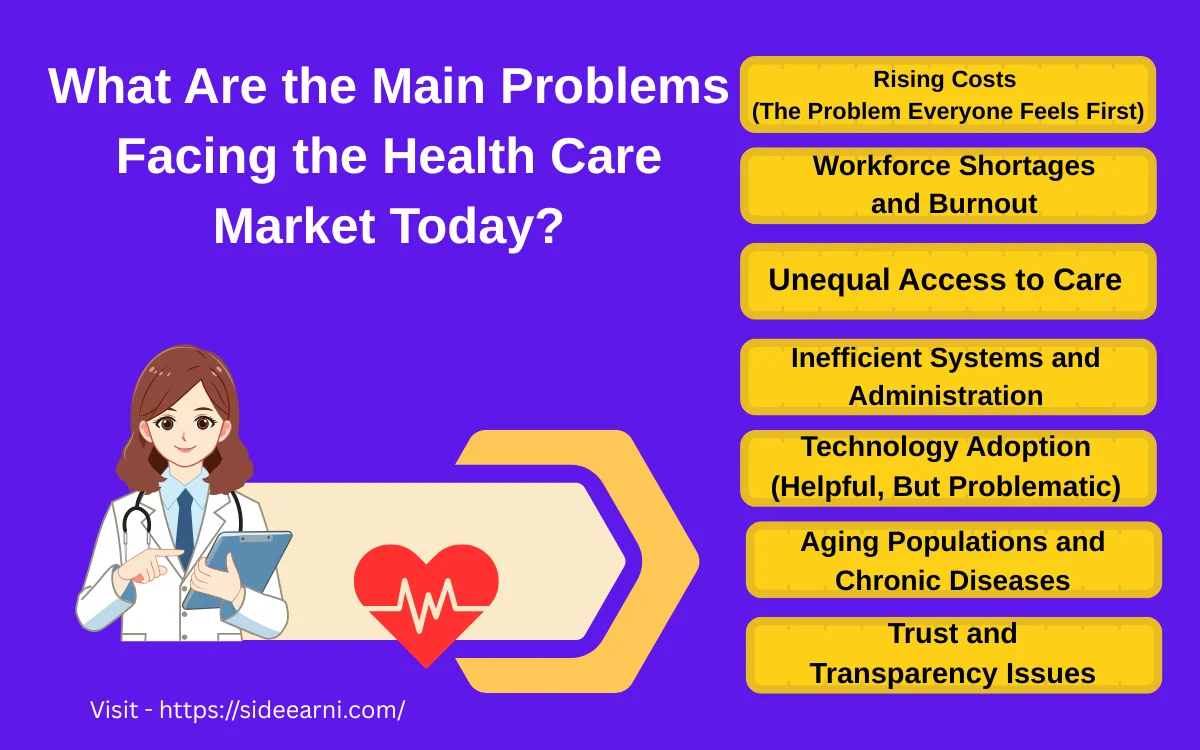
1️⃣ Rising Costs (The Problem Everyone Feels First)
The biggest and most visible problem is cost.
Healthcare is getting more expensive every year:
- Hospital bills are higher
- Medicines cost more
- Insurance premiums keep increasing
- Even basic checkups feel costly
For many families, one medical emergency can destroy years of savings.
Why this happens:
- Expensive medical technology
- Administrative and insurance overhead
- Price differences with little transparency
- Aging populations needing more care
When healthcare becomes unaffordable, people delay treatment—and that creates bigger problems later.
2️⃣ Workforce Shortages and Burnout
Behind every hospital, clinic, and lab are people—and right now, there aren’t enough of them.
The health care market is facing:
- Shortage of doctors and nurses
- Overworked hospital staff
- High burnout and early retirements
This leads to:
- Longer waiting times
- Shorter patient consultations
- Increased medical errors
- Lower patient satisfaction
When healthcare workers are exhausted, the system cannot function at its best.
3️⃣ Unequal Access to Care
Not everyone gets the same level of healthcare—and that’s a major market problem.
Access often depends on:
- Where you live (urban vs rural)
- Your income level
- Your insurance coverage
In many regions:
- Rural areas lack specialists
- Hospitals are overcrowded
- Preventive care is limited
This creates a system where quality care becomes a privilege instead of a basic service.
4️⃣ Inefficient Systems and Administration
Healthcare isn’t just about treatment—it’s also about paperwork, approvals, and systems.
Many health care markets suffer from:
- Complex insurance processes
- Slow approvals and reimbursements
- Outdated IT systems
- Poor coordination between providers
Patients often feel lost between hospitals, labs, insurers, and pharmacies.
This inefficiency:
- Raises costs
- Wastes time
- Frustrates both patients and providers
5️⃣ Technology Adoption (Helpful, But Problematic)
Technology is transforming healthcare—telemedicine, AI diagnostics, digital records—but it’s not all smooth.
Key challenges:
- High cost of implementation
- Data privacy and security risks
- Lack of training for staff
- Unequal access to digital tools
Technology can improve care, but when adopted poorly, it can create confusion and mistrust instead of solutions.
6️⃣ Aging Populations and Chronic Diseases
People are living longer—and that’s a good thing.
But it also means:
- More chronic conditions like diabetes and heart disease
- Higher long-term care costs
- Increased demand for specialists and caregivers
The health care market was designed for short-term treatment, not lifelong disease management.
This mismatch puts constant pressure on hospitals, insurers, and families.
7️⃣ Trust and Transparency Issues
Many patients don’t fully trust the healthcare market anymore.
Common concerns include:
- Unclear pricing
- Conflicting medical advice
- Fear of unnecessary treatments
- Data privacy worries
When patients don’t trust the system, engagement drops—and outcomes worsen.
How These Problems Are Connected
Here’s the important part most people miss:
Each problem makes the others worse.
- High costs reduce access
- Staff shortages reduce quality
- Poor systems increase costs
- Technology gaps increase inequality
This creates a cycle that’s hard to break without serious reform.
What This Means for the Future of Healthcare

If these problems aren’t addressed:
- Healthcare will become less affordable
- Quality gaps will widen
- Workforce stress will increase
- Patient trust will decline
But there’s also opportunity.
Smarter policies, better technology use, patient-centered care, and preventive health models can slowly fix these issues—if markets prioritize people over complexity.
Final Thoughts
The main problems facing the health care market today are rising costs, workforce shortages, unequal access, inefficiency, and the challenge of managing modern technology and aging populations—all at the same time.
Healthcare doesn’t fail because of lack of science.
It struggles because of how the system is designed and managed.
Understanding these problems is the first step toward demanding better solutions.